Introduction
A professional curriculum vitae (CV) is one of the most important documents in your career journey. Whether you are applying for your first job, looking for a better employment opportunity, or planning to work internationally, having a well-organized CV can make a significant difference. Employers receive hundreds of applications for a single vacancy, so presenting your qualifications, experience, and skills professionally is essential.
Choosing the right CV format helps you communicate your professional background clearly and effectively. It allows recruiters to find important information quickly, understand your career achievements, and determine whether you are suitable for a particular position. A poorly organized document may reduce your chances of getting an interview, even if you have excellent qualifications.
In this comprehensive guide, you will learn how to create an impressive CV, understand its essential sections, choose the appropriate layout, and avoid common mistakes. These practical tips will help students, fresh graduates, experienced professionals, and job seekers create a strong application that attracts employers.
What Is a CV?
A curriculum vitae, commonly known as a CV, is a professional document that provides detailed information about an individual’s educational qualifications, employment history, skills, achievements, certifications, and other relevant experiences.
Its primary purpose is to introduce candidates to potential employers and demonstrate their suitability for a specific position. Recruiters use this document to evaluate applicants before inviting them for interviews.
A CV is particularly important when applying for academic positions, professional opportunities, internships, scholarships, and international employment. Depending on the country and industry, the terms CV and resume may have slightly different meanings.
In Pakistan, the United Kingdom, and many other countries, a CV is commonly used for general job applications. In the United States, a resume is generally preferred for most non-academic employment opportunities.
Why Is a Professional CV Important?
Your CV creates an important first impression on recruiters. Before meeting you personally, employers use this document to understand your professional background and determine whether your qualifications match their requirements.
Here are some reasons why creating an effective CV matters:
1. Creates a Positive First Impression
A clean and professional layout makes your application easier to read. Proper formatting, consistent headings, and relevant information demonstrate attention to detail and professionalism.
2. Highlights Your Qualifications
Your educational background, professional experience, certifications, and technical abilities help employers understand what you can contribute to their organization.
3. Improves Interview Opportunities
A well-written document highlights your strengths and achievements, increasing the possibility that recruiters will shortlist your application.
4. Demonstrates Professionalism
An organized presentation reflects your communication skills, seriousness, and understanding of professional expectations.
5. Supports Career Development
Updating your document regularly allows you to track your achievements, newly developed skill


Different Types of CV Formats
Before preparing your document, it is important to understand the different layouts available. Each type serves a particular purpose and suits different career situations.
1. Chronological CV
A chronological CV presents your professional experience in reverse chronological order, starting with your most recent position.
It is one of the most popular choices among experienced professionals because it clearly demonstrates career progression.
Best for:
Experienced professionals.
Candidates with consistent employment histories.
Individuals applying for positions within their existing industries.
2. Functional CV
A functional CV emphasizes skills, abilities, and achievements rather than focusing primarily on employment history.
It can be useful for individuals who have employment gaps, are changing careers, or have limited professional experience.
Best for:
Fresh graduates.
Career changers.
Freelancers.
Candidates with limited employment histories.
3. Combination CV
A combination CV brings together elements of chronological and functional layouts. It highlights professional skills while also providing a detailed employment history.
This approach is suitable for experienced candidates who want to demonstrate both their abilities and career achievements.
Best for:
Senior professionals.
Managers.
Technical specialists.
Candidates with diverse professional experience.
4. Academic CV
An academic CV focuses on educational achievements, research experience, publications, teaching experience, conferences, and academic qualifications.
It is commonly required when applying for university positions, research opportunities, scholarships, and postgraduate academic programs.
Essential Sections of a Professional CV
An effective CV should contain relevant information arranged in a logical order. Although the exact sections may vary according to your profession, the following elements are generally recommended.
1. Personal Information and Contact Details
Start with your basic contact information so employers can easily reach you.
Include:
Full name.
Professional email address.
Phone number.
City and country.
LinkedIn profile, if relevant.
Professional portfolio or website, if applicable.
Avoid including unnecessary personal information such as your religion, marital status, or national identification number unless specifically required by the employer or application process.
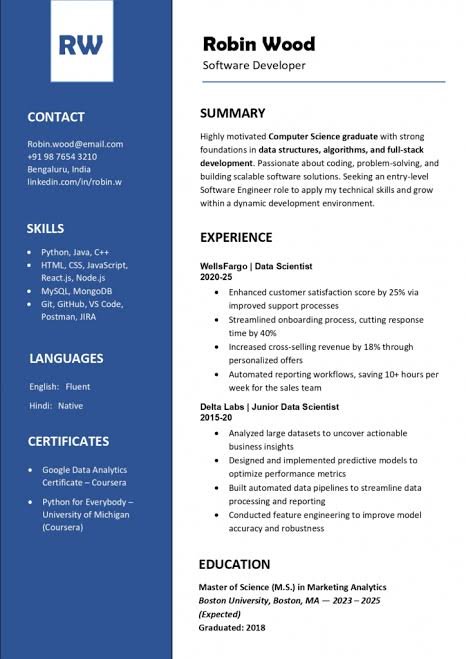
2. Professional Summary
A professional summary is a short introduction that explains your qualifications, experience, and major strengths.
It should generally contain three to four sentences and highlight information relevant to the position.
Example:
“Motivated business administration graduate with strong communication, problem-solving, and organizational skills. Experienced in academic projects, teamwork, and basic business operations. Interested in contributing to a professional organization while developing practical industry knowledge.”
A strong summary helps recruiters quickly understand your professional profile.
3. Career Objective
A career objective explains your professional goals and what you hope to achieve in the position.
It is particularly useful for fresh graduates, students, and individuals entering a new industry.
Example:
“Seeking an entry-level marketing position where I can apply my communication, research, and digital marketing skills while contributing to organizational growth.”
Keep your objective specific, realistic, and connected to the job you are applying for.
4. Educational Background
Your educational qualifications demonstrate your academic knowledge and learning experience.
List your most recent qualification first.
Include:
Degree or certificate name.
Institution name.
Relevant academic achievements.
Major subjects, when appropriate.
Example:
Bachelor of Business Administration
University Name
2022–2026
If you are a student or recent graduate, you can place your educational information near the beginning of your CV.
5. Work Experience
This section explains your previous employment, responsibilities, and professional achievements.
For each position, mention:
Job title.
Company or organization name.
Employment dates.
Main responsibilities.
Important achievements.
Use action verbs such as managed, developed, organized, improved, coordinated, and implemented.
Whenever possible, include measurable achievements.
For example, instead of writing “Responsible for social media,” write “Managed social media content and improved audience engagement through consistent publishing.”
If you are a fresh graduate, you can include internships, volunteer work, freelance projects, and relevant practical experience.
6. Skills and Competencies
The skills section highlights your abilities and demonstrates how you can contribute to an organization.
Consider including both technical and interpersonal skills.
Technical skills:
Microsoft Office.
Data analysis.
Graphic design.
Digital marketing.
Programming.
Search engine optimization.
Project management software.
Soft skills:
Communication.
Teamwork.
Leadership.
Time management.
Problem-solving.
Adaptability.
Critical thinking.
Choose skills that are relevant to the position instead of adding unrelated abilities.
7. Certifications and Training
Certifications demonstrate your commitment to professional development and continuous learning.
Include relevant courses, workshops, and professional training programs.
Mention the certification title, issuing organization, and completion year.
Examples include digital marketing certifications, IT training, project management courses, language certificates, and professional development programs.
8. Languages
If you can communicate in multiple languages, mention them in a separate section.
For example:
English – Professional proficiency.
Urdu – Native proficiency.
Arabic – Basic proficiency.
Always describe your language abilities honestly.
9. References
References are individuals who can provide information about your professional abilities, character, and work performance.
Depending on the employer’s requirements, you can include professional references or provide them upon request.
Always obtain permission before sharing another person’s contact information.
How to Create a CV Step by Step
Creating an impressive professional document becomes easier when you follow a structured process.
Step 1: Understand the Job Requirements
Read the job advertisement carefully before preparing your application. Identify the qualifications, experience, and skills required by the employer.
This helps you decide which information deserves the most attention.
Step 2: Select an Appropriate Layout
Choose a CV format that matches your career experience and professional objectives.
For example, a recent graduate may benefit from a layout that emphasizes education and skills, while an experienced manager may prefer a chronological structure.
Step 3: Write Clear and Relevant Content
Use simple language and professional sentences. Avoid unnecessary descriptions, complicated vocabulary, and lengthy paragraphs.
Every section should communicate useful information about your professional background.
Step 4: Organize Your Information
Arrange sections according to their importance. Make sure headings, dates, spacing, and bullet points are consistent throughout the document.
Step 5: Customize for Every Job
Avoid sending exactly the same application to every employer. Adjust your professional summary, skills, and achievements according to the requirements of each vacancy.
Step 6: Proofread Your Document
Check spelling, grammar, punctuation, contact details, and formatting before submitting your application.
Small mistakes can create an unprofessional impression.
Step 7: Save and Submit in the Correct Format
PDF is generally a suitable option because it preserves the document’s appearance across different devices. However, follow the employer’s instructions if a Word document or another file type is requested.
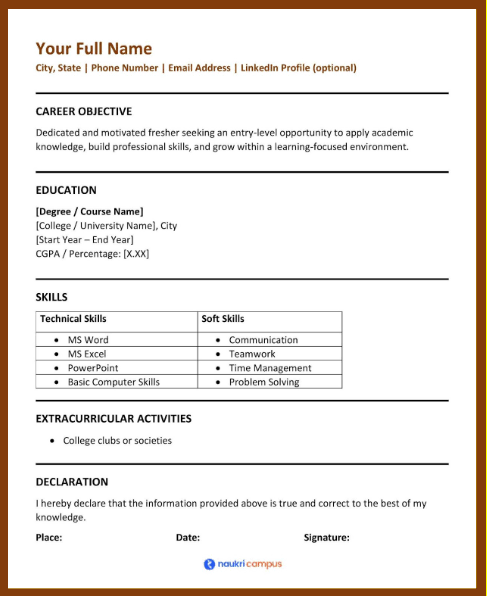
Simple CV Format Example for Fresh Graduates
Fresh graduates often believe that limited work experience prevents them from creating an impressive application. However, academic projects, internships, volunteer activities, and practical skills can demonstrate their potential.
Here is a simple structure you can follow: