A wedding is one of the most memorable occasions in a woman’s life, and choosing the perfect bridal outfit makes the celebration even more special. Every culture has its own wedding traditions, clothing styles, and artistic details that reflect its history and identity. Kashmiri bridal fashion is particularly admired for its elegant appearance, beautiful embroidery, luxurious fabrics, and traditional charm.
A Kashmiri bridal dress design combines cultural heritage with sophisticated fashion. Traditional outfits often feature detailed craftsmanship, rich colors, graceful silhouettes, and beautiful accessories. These elements create a distinctive appearance that celebrates the beauty of Kashmiri traditions.
Modern bridal fashion has also introduced new interpretations of traditional clothing. Today’s brides can choose from classic embroidered outfits, contemporary lehengas, elegant anarkalis, and customized wedding dresses inspired by Kashmiri artistry.
Whether you prefer a traditional wedding appearance or a modern bridal look, exploring different styles can help you find an outfit that reflects your personality. In this guide, we will discuss traditional clothing, popular fabrics, embroidery techniques, bridal colors, jewelry, and the latest fashion inspiration.
What Makes Kashmiri Bridal Fashion Special?
Kashmiri fashion is known for its artistic craftsmanship and connection with regional culture. Traditional clothing reflects the region’s history, climate, textile traditions, and appreciation for intricate decorative work.
One of the most recognizable garments associated with Kashmiri clothing is the pheran. It is a loose-fitting traditional garment that has been worn in different styles across Kashmir. Depending on the occasion and design, it can feature embroidery, decorative borders, and beautiful fabric details.
A Kashmiri bridal dress design often takes inspiration from these traditional garments while incorporating modern cuts and luxurious materials.
Some important characteristics include:
Traditional embroidery: Detailed needlework adds beauty and cultural character.
Rich fabrics: Velvet, silk, brocade, and other decorative textiles create an elegant appearance.
Elegant colors: Deep red, maroon, green, gold, and pastel shades are popular inspirations.
Artistic detailing: Decorative borders, floral patterns, and intricate motifs enhance the outfit.
Traditional accessories: Jewelry and headpieces complete the overall bridal appearance.
The combination of these details makes Kashmiri-inspired bridal clothing distinctive and memorable.
1. Traditional Kashmiri Bridal Dress Designs
Traditional wedding clothing remains an important source of inspiration for brides who appreciate cultural heritage. These outfits combine graceful shapes with detailed craftsmanship.
Traditional Pheran-Inspired Bridal Outfit
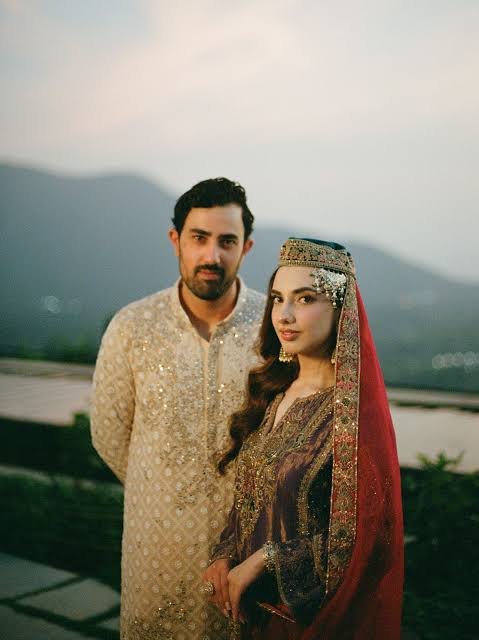
The pheran is one of the most recognizable elements of Kashmiri clothing. For weddings, designers can create a more luxurious interpretation using rich fabrics, decorative embroidery, and embellished sleeves.
A bridal pheran-inspired outfit may include:
Velvet or silk fabric.
Embroidered necklines and cuffs.
Long Embroidered Bridal Dress
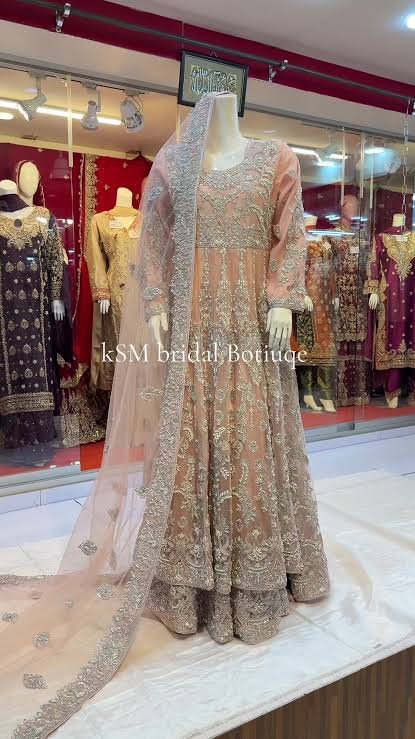
Long embroidered dresses are another beautiful choice for wedding celebrations. They can feature fitted bodices, flowing skirts, and detailed decorative work.
Designers often use floral embroidery, metallic thread, and carefully placed embellishments to create a sophisticated look.
Traditional Bridal Suit
A beautifully designed traditional suit can be an elegant option for a nikah ceremony, engagement, or smaller wedding celebration.
A long shirt with embroidered trousers and a matching dupatta creates a balanced outfit. Choosing coordinated colors and delicate accessories can make the look more refined.
2. Popular Colors for Kashmiri Bridal Dresses
Color selection plays an important role in bridal fashion. The right shade can complement the fabric, embroidery, jewelry, and overall wedding theme.
A Kashmiri bridal dress design can be created in both traditional and contemporary colors.
Red and Maroon
Red is a popular bridal color across many South Asian wedding traditions. It represents celebration, happiness, and festivity.
Maroon offers a deeper and more sophisticated variation. Both shades work beautifully with golden embroidery, traditional jewelry, and embellished dupattas.
Emerald Green
Emerald green creates a luxurious bridal appearance. It looks especially beautiful with gold, antique metallic, and traditional floral embroidery.
Brides who prefer a distinctive alternative to red can consider this elegant shade.
Royal Blue
Royal blue is another attractive choice for formal wedding outfits. It offers a rich appearance and pairs well with silver, gold, and delicate stone embellishments.
Pastel Pink and Peach
Pastel shades are popular among brides who prefer soft and romantic clothing.
Light pink, peach, lavender, and powder blue can create a delicate bridal appearance. These colors are especially suitable for daytime ceremonies and contemporary wedding celebrations.
Golden and Ivory
Gold and ivory are timeless choices for elegant wedding fashion. Gold embroidery on ivory fabric creates a refined appearance, while a fully golden outfit can provide a luxurious look for a formal event.
3. Best Fabrics for Kashmiri Bridal Wear
Fabric selection determines how a bridal outfit looks, feels, and moves. Brides should consider the wedding season, ceremony location, embroidery style, and comfort before selecting a material.
Here are some popular fabrics used in bridal fashion.
Velvet
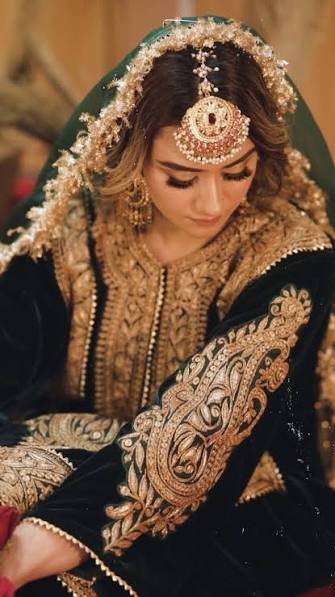
Velvet is associated with luxurious formal clothing. Its rich texture makes it suitable for winter weddings and heavily embroidered outfits.
Deep maroon, emerald green, navy blue, and burgundy velvet can create a beautiful traditional-inspired bridal look.
Silk
Silk is valued for its smooth texture and elegant appearance. It works well for long dresses, traditional suits, and formal wedding ensembles.
Silk fabrics also provide a beautiful base for embroidery and decorative embellishments.
Brocade
Brocade features woven decorative patterns that add texture and visual interest to clothing.
It can be used for bridal shirts, lehengas, sleeves, and borders. Gold and silver woven designs are especially popular for festive outfits.
Chiffon
Chiffon is lightweight and flowy, making it a suitable choice for dupattas and layered bridal outfits.
A chiffon dupatta with delicate embroidery can balance a heavily dec

4. Beautiful Kashmiri Embroidery and Traditional Craftsmanship
Embroidery is one of the most attractive elements of Kashmiri-inspired clothing. Kashmir has a rich textile heritage, and its traditional needlework is admired for detailed patterns and artistic craftsmanship.
A Kashmiri bridal dress design can incorporate different embroidery styles to create a unique wedding outfit.
Aari Embroidery
Aari work is a traditional embroidery technique that uses a hooked needle to create decorative patterns.
It can produce delicate floral designs, decorative borders, and detailed motifs. This technique is commonly appreciated in South Asian formal clothing.
Sozni Embroidery
Sozni is a well-known Kashmiri needlework tradition associated with fine, detailed embroidery.
It is particularly admired for delicate patterns and intricate craftsmanship. Depending on the garment, it can be used to decorate shawls, fabrics, and special clothing.
Tilla Embroidery
Tilla work traditionally involves metallic threads, creating decorative golden or silver details.
It is a beautiful option for bridal sleeves, necklines, borders, and dupattas. Metallic embroidery can add a festive appearance without requiring excessive embellishment.
Floral Patterns
Floral motifs are another attractive source of inspiration. Flowers, leaves, and natural patterns can create a delicate and graceful appearance.
Designers can combine these motifs with traditional borders and contemporary silhouettes.
5. Modern Kashmiri Bridal Dress Design Trends
Bridal fashion continues to evolve as designers experiment with new silhouettes, fabrics, and decorative techniques.
Modern brides often prefer outfits that preserve traditional inspiration while offering greater flexibility and personal expression.
Contemporary Bridal Lehenga
A Kashmiri-inspired lehenga combines the traditional beauty of regional embroidery with the flowing structure of a modern bridal skirt.
It can include a decorated blouse, embroidered lehenga, and matching dupatta.
Deep red, maroon, and emerald green are attractive options for this style.
Embroidered Anarkali Dress
Anarkali dresses are popular for their flowing silhouette and elegant appearance.
A Kashmiri-inspired version can feature detailed embroidery on the neckline, sleeves, and hemline. It is a suitable option for wedding receptions and formal celebrations.
Modern Pheran With Traditional Details
A contemporary pheran-inspired outfit can combine a traditional loose silhouette with modern tailoring.
Designers may introduce decorative belts, embroidered panels, stylish sleeves, and coordinated trousers.
Minimalist Bridal Outfit
Not every bride prefers heavy embroidery and elaborate decoration.
Minimalist outfits focus on elegant cuts, beautiful fabrics, subtle embroidery, and carefully selected accessories.
This approach is suitable for brides who want a comfortable yet sophisticated wedding appearance.
6. How to Choose the Perfect Bridal Dress
Selecting a wedding outfit requires careful consideration. A beautiful dress should not only look attractive but should also suit the bride’s preferences, ceremony, and comfort requirements.
When choosing a Kashmiri bridal dress design, consider the following factors.
Consider Your Wedding Ceremony
Different wedding events may require different outfits.
For example:
Engagement: A pastel or lightly embroidered dress.
Nikah: An elegant traditional suit or long embroidered outfit.
Mehndi: A colorful dress with playful decorative details.
Wedding ceremony: A luxurious traditional-inspired bridal outfit.
Reception: A contemporary lehenga, gown, or embroidered formal dress.
Select Comfortable Fabric
A wedding celebration may involve several hours of sitting, walking, and photography.
Choose a fabric that feels comfortable and is appropriate for the season. Heavily layered outfits should be properly fitted to avoid unnecessary discomfort.
Pay Attention to Embroidery
Embroidery should complement the outfit rather than overwhelm it.
A heavily embroidered neckline can be balanced with simpler sleeves and borders. Similarly, an elaborate dupatta can become the main decorative feature of a minimalist dress.
Set a Realistic Budget
Bridal outfits are available at different price levels. Your budget should include the dress, stitching, alterations, embroidery, dupatta, and accessories.
Custom-made clothing may offer more flexibility, but it is important to discuss pricing and delivery timelines with the designer.
7. Bridal Jewelry and Accessories
Jewelry completes the bridal appearance and helps connect the outfit with traditional wedding styling.
Kashmiri-inspired bridal clothing can be paired with both traditional regional jewelry and contemporary South Asian bridal accessories.
Dejhoor-Inspired Jewelry
The dejhoor is a distinctive ornament associated with Kashmiri Pandit women’s traditional jewelry and cultural identity.
It carries cultural significance and can be an important source of inspiration for brides interested in Kashmiri heritage.
Traditional Necklaces
Gold necklaces, chokers, and layered jewelry can complement embroidered wedding outfits.
The choice depends on the neckline, dress color, and amount of embroidery.
Maang Tikka
A maang tikka adds a traditional bridal touch and works beautifully with different South Asian wedding hairstyles.
Earrings and Bangles
Jhumkas, chandbalis, and decorative bangles can complete the look.

8. Where to Find Beautiful Kashmiri Bridal Dress Inspiration
Finding the right outfit becomes easier when brides explore different designs and compare their features.
Some useful sources of inspiration include:
Pinterest: Explore traditional and contemporary bridal outfit ideas.
Instagram: Follow bridal designers, embroidery artists, and fashion boutiques.
Fashion exhibitions: Discover handcrafted textiles and regional clothing.
Local boutiques: Explore customized outfits and traditional embroidery.
Wedding photography: Observe how different fabrics, colors, and accessories look in real celebrations.
Before placing an order, examine the quality of the fabric and embroidery. Ask for clear photographs, stitching details, and delivery information.
9. Tips for Maintaining Your Bridal Dress
A wedding outfit can have sentimental and financial value, so proper care is important.
Follow these recommendations to maintain its beauty:
Read the garment’s care instructions before cleaning.
Store the outfit in a clean, dry, and breathable garment bag.
Avoid direct sunlight for extended periods.
Keep metallic embroidery away from rough surfaces.
Use professional dry cleaning when recommended.
Store jewelry and decorative accessories separately.
Check the outfit before packing or transporting it.
Proper storage can help preserve the fabric, embroidery, and decorative elements for future use.
Frequently Asked Questions (FAQs)
1. What is special about Kashmiri bridal dresses?
Kashmiri bridal clothing is admired for its traditional textile inspiration, detailed embroidery, rich fabrics, elegant colors, and cultural craftsmanship. Modern designs often combine these elements with contemporary silhouettes.
2. Which colors are best for Kashmiri bridal outfits?
Red, maroon, emerald green, royal blue, gold, ivory, and pastel pink are attractive choices. The best color depends on personal preference, wedding theme, and fabric selection.
3. What is a traditional Kashmiri bridal outfit called?
The pheran is a recognizable traditional Kashmiri garment. Bridal outfits may take inspiration from its silhouette and decorative details, although there is no single outfit worn by every Kashmiri bride.
4. Which embroidery is popular in Kashmiri clothing?
Aari, Sozni, and Tilla embroidery are among the well-known Kashmiri textile traditions. They are appreciated for their detailed craftsmanship and decorative beauty.
5. Can I wear a modern lehenga with Kashmiri embroidery?
Yes. A contemporary lehenga can incorporate Kashmiri-inspired floral motifs, metallic threadwork, and decorative borders. This creates a combination of traditional craftsmanship and modern bridal fashion.
6. Which fabric is best for a Kashmiri wedding dress?
Velvet, silk, brocade, chiffon, and organza are popular options. The best fabric depends on the weather, outfit structure, embroidery, and comfort requirements.
7. How can I style a traditional Kashmiri bridal outfit?
You can style it with coordinated jewelry, an elegant dupatta, traditional footwear, and a hairstyle that complements the neckline and overall outfit.
Conclusion
Kashmiri bridal fashion offers a beautiful combination of cultural heritage, traditional craftsmanship, and modern creativity. From embroidered pheran-inspired outfits to elegant lehengas and luxurious silk dresses, there are many ways to create a memorable wedding appearance.
Choosing the right Kashmiri bridal dress design involves considering fabric, embroidery, color, comfort, accessories, and personal style. Brides can preserve traditional elements while introducing contemporary details that make their outfits unique.
Whether you prefer a classic maroon outfit, a luxurious velvet dress, or a modern pastel ensemble, the most important thing is to choose clothing that makes you feel confident and comfortable on your special day.
A thoughtfully selected bridal outfit is more than just wedding clothing. It can also represent cultural appreciation, personal expression, and memories that last for a lifetime.